

Developer-friendly form builder SDK with backend data control





Advanced features beyond traditional PDF forms
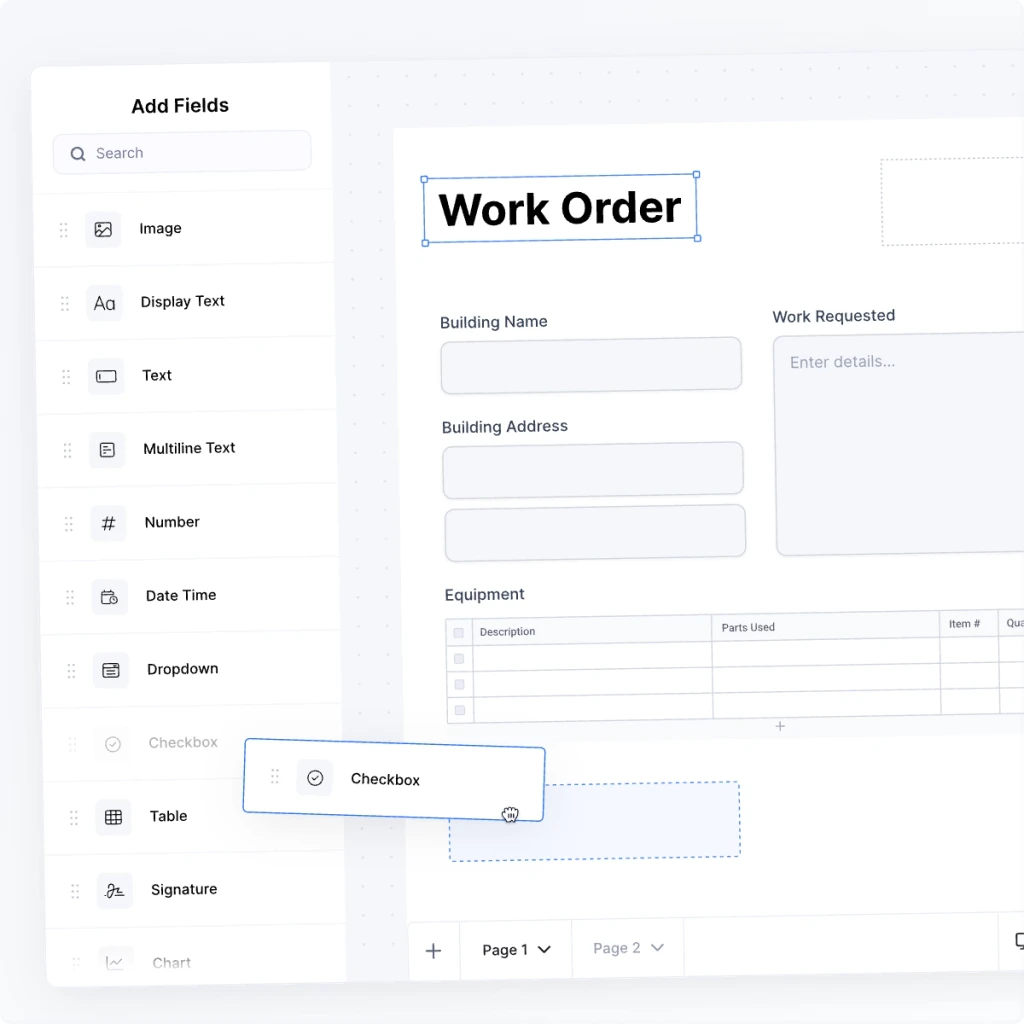
Pixel-perfect draggable fields
Implement a system of record with independent files, revision control, enforced fields, field validation, immutability, and file restrictions.
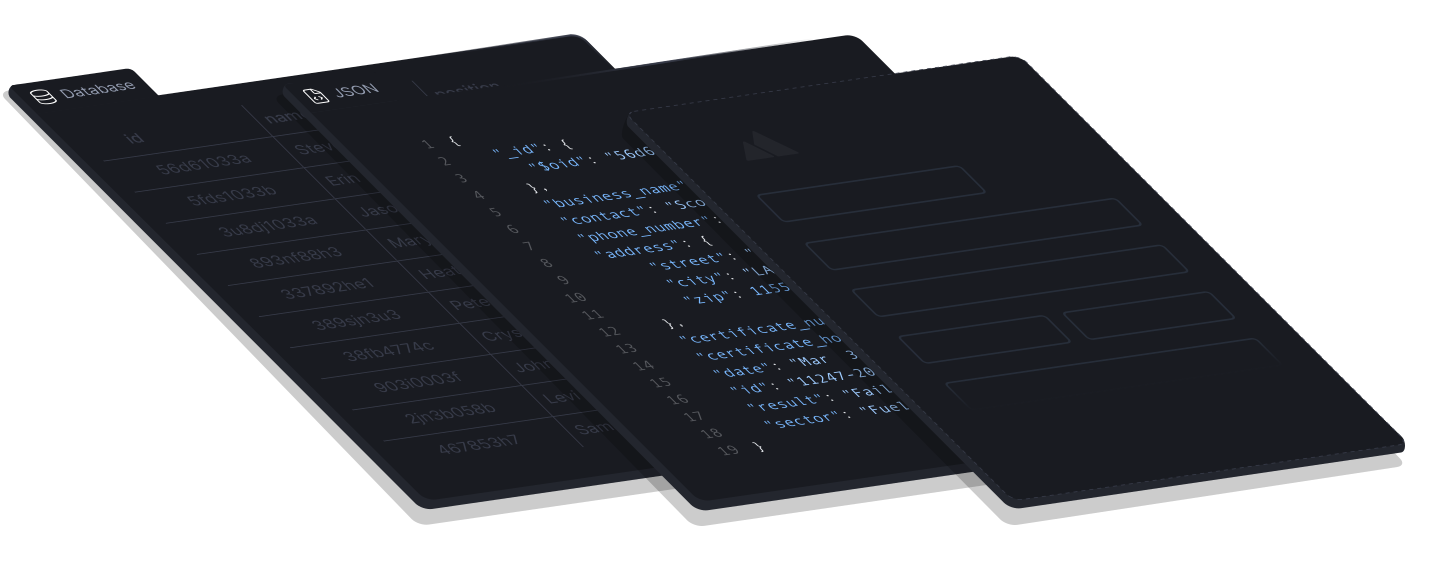
Field database identifiers
Set custom pre-defined identifiers to the draggable form fields for users to place on forms to programmatically populate forms with backend data.
Dynamic form fields
Overcome the constraints of complex data inputs with flexible expanding tables, duplicable fields and sections, and page creation.
Graph and chart elements
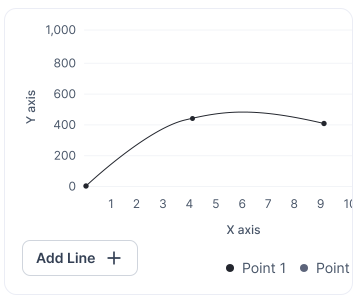
Transform your data into visually appealing reports with do-it-yourself drag-and-drop data-rich graph and chart elements.
Form data processing
Control, query, and process form data for deeper internal and external use. Overcome the traditional binary PDF limitations.
Real-time data flow triggers
Implement listeners to trigger events on the individual field level in real-time based on form data entries and input interactions.
Responsive form layouts
Create flexible data collection interfaces that responsively fit the width and height of any area or screen size.
Deep conditional logic
Control the visual display and flow of data entry with value conditions on page, field, and sub-field levels.
Theming
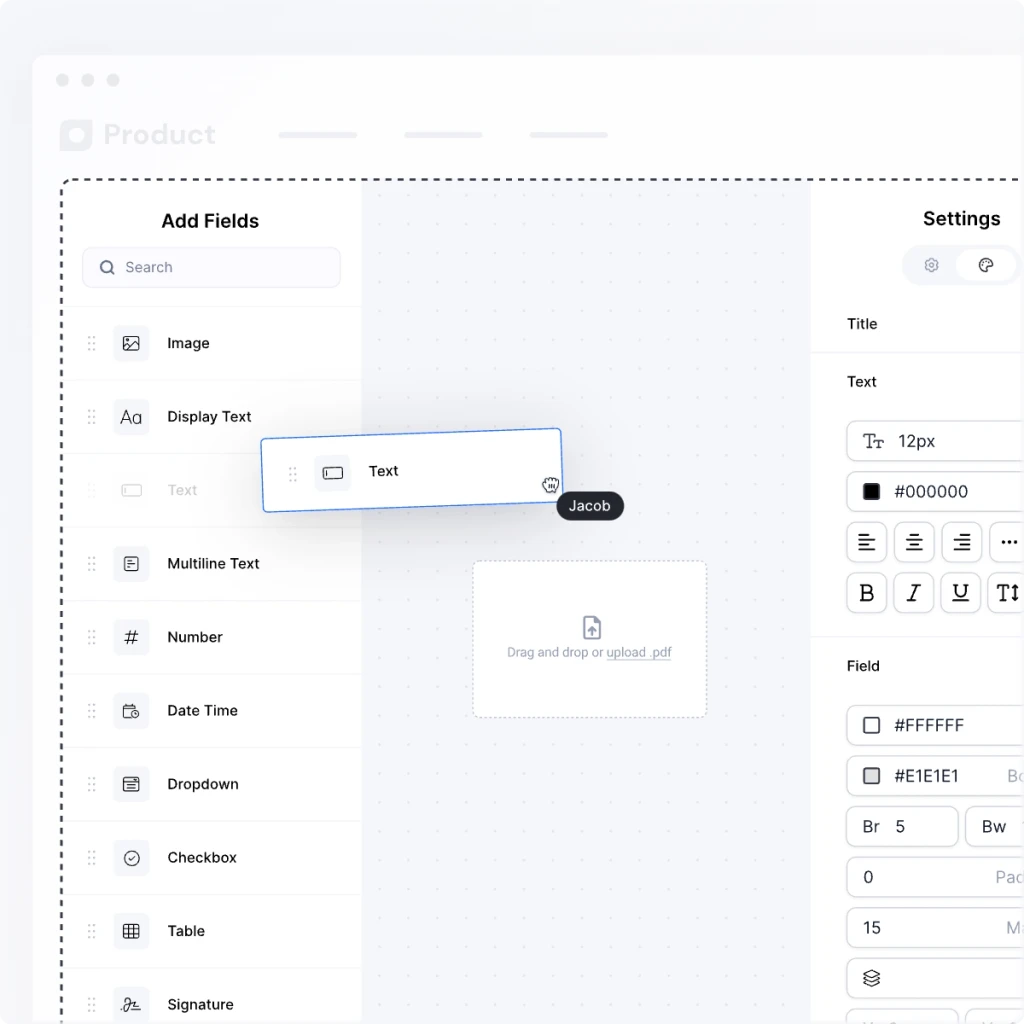
Customize the design of UI components to match your app, branding, and existing interface with a simple JSON edit.
A form platform that empowers everyone
Joyfill has everything you need to provide the very best form management experience for your SaaS users, developers, and support staff.
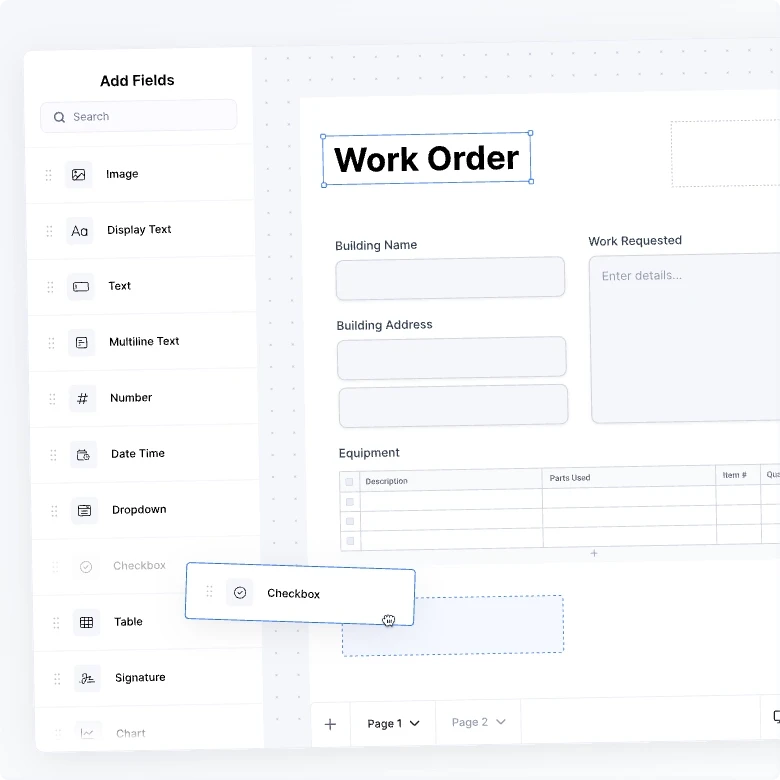
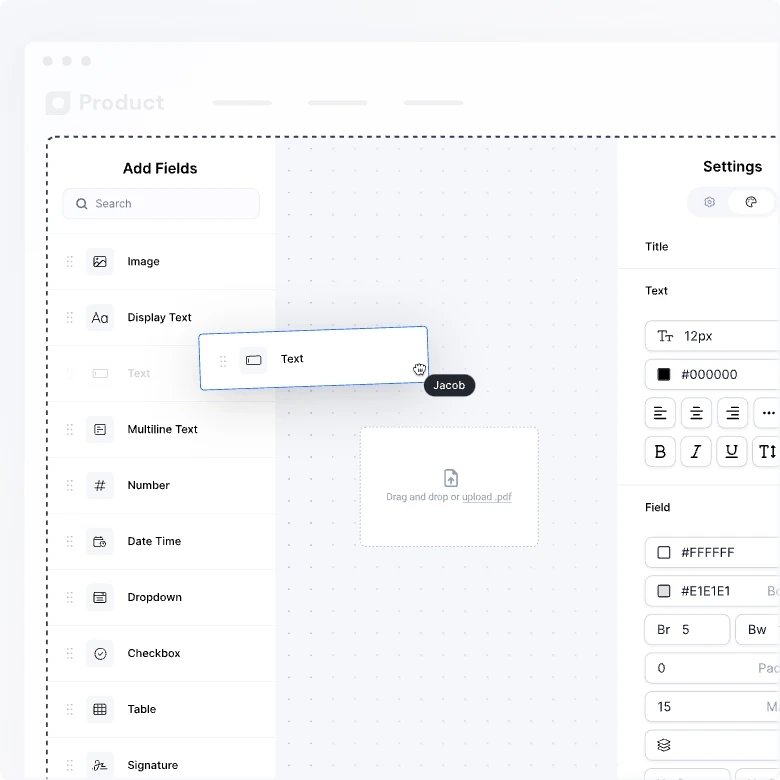
Drag-n-drop form builder for your users
Form management portal for your support staff
Backend data mapping logic for your developers
The ability to let our users build and customize forms independently has transformed our operations. We’ve reduced workload on our professional services team tremendously.
Aidan Lister
CEO at Uptick

More about Joyfill’s form builder SDK
Enable users to build and design fillable forms with an easy do-it-yourself form builder without the need for developers to get involved for every form template or one-off documents. With industry-backed experience, Joyfill offers the very best form empowerment features on the planet. The user experience down to the intuitive design and end results flow during data entry across multiple screen sizes has been thought out, battle-tested, perfected, and deployed into the form builder SDK. Joyfill’s form builder SDK can accommodate almost any form scenario and use case imaginable.
Developers can pre-configure draggable fields linked to their database to programmatically inject values to the locations where the fields are placed on the forms by users.
End users can then drag those linked database fields onto the form themselves with a user-friendly drag-and-drop form builder experience.
Joyfill revolutionizes form creation with its intuitive form builder SDK, offering developers and users the freedom to design and build fillable forms without the constant involvement of developers.
In an era where the form builder market is experiencing remarkable growth, Joyfill stands out as a leader, driven by industry-backed experience and an unwavering commitment to providing the best form empowerment features available.
The form builder market has witnessed exponential growth in recent years, with businesses and individuals recognizing the value of user-friendly tools. According to recent statistics, there has been a 30% year-over-year increase in the adoption of form builders across various industries. This surge is driven by the demand for customizable, efficient, and cost-effective solutions, such as Joyfill's form builder SDK. Joyfill's form builder SDK has been meticulously crafted to ensure an exceptional user experience, making form creation accessible to users of all technical backgrounds. It's responsive design and seamless data entry on multiple screen sizes cater to the contemporary preference for flexible and accessible form-building solutions.
To learn more, refer to our guide to embedding a form builder with React.